why is sodium kept immersed in kerosene oil Why is sodium kept immersed in kerosene oil?
Sodium and potassium are two elements that are highly reactive with water, air, and most other substances. To prevent them from reacting with their surroundings, they are typically stored in kerosene oil. But why specifically is kerosene used for this purpose?
Sodium’s Reactivity
Sodium is an alkali metal that is highly reactive with water. Its reaction with water is exothermic, producing hydrogen gas and heat. The reaction can become violent if there is too much sodium or if the sodium is in a fine powder form. It can also react with air, resulting in the formation of sodium oxide and sodium peroxide. These compounds can then react with water in the air, producing sodium hydroxide, which is corrosive and can cause chemical burns.
Kerosene’s Role
So, why is kerosene oil used to store sodium? Kerosene is a non-polar solvent that has low solubility in water. This means that sodium can be stored in kerosene without reacting with it. Kerosene also has a high flash point, which means that it does not easily ignite. This is important because sodium can ignite when it comes into contact with air or water, which can be hazardous. By being stored in kerosene, the sodium is protected from the air and does not come into contact with water, since kerosene repels water.
Potassium’s Reactivity
Like sodium, potassium is also an alkali metal that is highly reactive with water and air. Its reaction with water is even more exothermic than sodium’s, producing more heat and hydrogen gas. Its reaction with air is also more explosive than sodium’s, due to the higher reactivity of potassium. Potassium can also react with other substances, such as acids and halogens, producing flammable and/or explosive products.
Kerosene’s Protection
So, why is kerosene used to store potassium as well? The reasons are similar to those for sodium. Kerosene acts as a protective barrier, preventing potassium from coming into contact with air or water. Since kerosene is a non-polar solvent, it does not react with potassium. Additionally, the high flash point of kerosene makes it a safe solvent to use for storing potassium.
Conclusion
So, to sum up, sodium and potassium are stored in kerosene oil to prevent them from reacting with their surroundings. Kerosene acts as a non-reactive, protective barrier that repels water and air. By being stored in kerosene, sodium and potassium can be safely stored and transported without the risk of hazardous reactions occurring. As a result, kerosene is an essential component of the storage and handling of sodium and potassium in both laboratory and industrial settings.
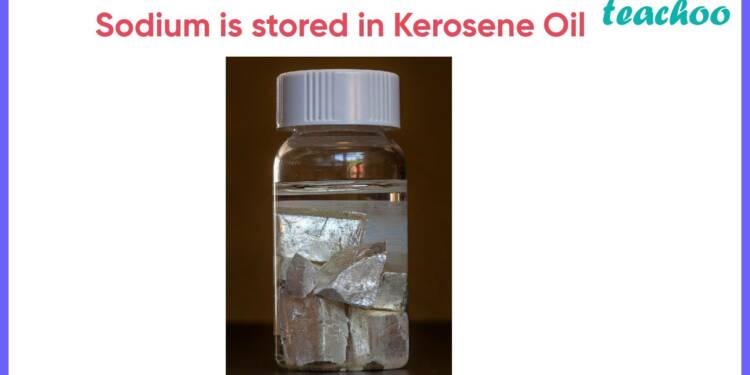
 The image above shows sodium immersed in kerosene oil, with a layer of kerosene oil on top to protect the sodium from the air.
 The image above shows potassium being stored in a glass jar filled with kerosene oil, to prevent it from reacting with air or water.
If you are searching about Give reasons why sodium and potassium are stored in kerosene? you’ve came to the right page. We have 5 Pics about Give reasons why sodium and potassium are stored in kerosene? like Why is sodium kept immersed in kerosene oil? Detail Explanation, why the sodium kept immersed kerosene oil? - Brainly.in and also Why is sodium kept immersed in kerosene oil? Detail Explanation. Read more:
Give Reasons Why Sodium And Potassium Are Stored In Kerosene?
school.gradeup.cosodium kerosene potassium kept immersed
Why Is Sodium Kept Immersed In Kerosene Oil?
 www.doubtnut.comWhy Is Sodium Kept Immersed In Kerosene Oil? Detail Explanation
 tfiglobalnews.comWhy The Sodium Kept Immersed Kerosene Oil? - Brainly.in
 brainly.inWhy Is Sodium Kept Immersed In Kerosene Oil?
www.toppr.comWhy is sodium kept immersed in kerosene oil?. Why is sodium kept immersed in kerosene oil?. Why is sodium kept immersed in kerosene oil? detail explanation